Showing posts with label Tuberculosis in India. Show all posts

Saturday, August 29, 2009

Please Participate - STOP TB (Strategy/Action/Partnership)

Hi! I would like to introduce you to a priceless and chaste act of doing something practical. If you have been bored by the ceaseless posts of mine regarding all kinds of altruistic behaviors here is a practical thing anyone of us can contribute to.

Each Picture is a link. Click them and Read along...

Click on this image for the video on STOP TB PARTNERSHIP.
I am a proud to be a member of Stop TB Partnership. Why don't you be?

About the Stop TB Partnership

The Stop TB Partnership was established in 2000 to realize the goal of eliminating TB as a public health problem and, ultimately, to obtain a world free of TB. It comprises a network of international organizations, countries, donors from the public and private sectors, governmental and nongovernmental organizations and individuals that have expressed an interest in working together to achieve this goal.


Click on the pic for a video
Caption:
A young TB patient is brought by her mother to see Dr Praveen at the MCD Chest Clinic in Patparganj in East Delhi.

In order to achieve our mission and make our vision a reality, the Stop TB Partnership has set the following goals:
  • Promote wider and wiser use of existing strategies to interrupt TB transmission by:
    • increasing access to accurate diagnosis and effective treatments by accelerating DOTS implementation to achieve the global targets for TB control; and
    • increasing the availability, affordability and quality of anti-TB drugs.
  • Derive strategies to address the challenges posed by emerging threats by:
  • Accelerate elimination of TB, by:
    • promoting research and development for new TB drugs, diagnostics and vaccines; and
    • promoting adoption of new and improved tools by ensuring appropriate use, access and affordability.
I take this opportunity to present few other international organizations helping out in this process. I cannot enumerate numerous local organizations striving hard for a healthy India and which are mostly ignored. I repeat a thyagaraja's saying here which is very much contextual.
endarO mahAnubhavulu |

andarIki vandanamulu ||


Click on the Banner for the website

Description: Dr Siddiqui (centre), DOTS provider and General Physician outside his clinic in Sahaspur Village.

Credits: � August 2004 Gary Hampton / The Global Fund

Click on the Title for the full article.

This is for people who are familiar with the health field and especially with MMWR in USA. Did you ever expect an article like this in MMWR? Please go through it by clicking on the picture above and know some facts. Your contribution would be invaluable.

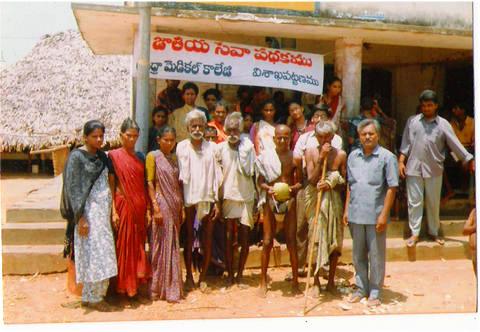
We, as medical students used to go to the remotest areas of tribal visakhapatnam and vizianagaram for distribution of medicines we collected from physcians for charity. The patients are sickest of all with no education and access. - under National Service Scheme


Ever wondered how I got in touch with this organization?? I saw this video first.

Again Rehman was the inspiration. Someone can evoke lots of potential in us making our slumbering souls to erupt.

Saturday, March 24, 2007

The TB Soup - March 24th World TB day

TB Soup


The Recipe to Maintain and Increase Tuberculosis

-- By Alberto Colorado, Director
Binational Health Project
County of San Diego
3851 Rosecrans St.
P.O. Box 85222, MS P511D
San Diego, CA 92186-5222

This is a program launched by the US-Mexico Office of Border Health, Texas. My freind and a member of Stop TB partnership, Dr. Sumanth had talked to some of the TB patients along the border and participated in the PhotoVoice Program. I would like to thank him for the contributuion and appreaciate his work. We all can contribute to this problem of Tuberculosis, even if we are not in our home country in anyway from spreading the awareness, doing TB research or planning programs or at the grassroot level.

This recipe below has not just come out of the blue. It was done with all efforts to have exact correlation with statistics available. This is very much applicable to the mexican border but if data is available on indian statistics regarding contributing factors to TB, we would make our recipe.

While I was doing this, I found this article about TB in INDIA. Have a look.

Tuberculosis is a disease that has prevailed through the centuries in indigent populations. Today, at the beginning of the 21st century we still follow the old recipe that favors a culture of separation between the people who have the disease and those who treat it.

Ingredients:

  • 1 drug sensitive and 1 drug resistant Mycobacteria
  • 40 oz. Mobile population without health insurance
  • 50 oz. Lack of access to care and patient education
  • 90 oz. Fragmented and costly medical system
  • 90 oz. Narrow vision of the problem
  • 50 oz. Barriers to communication
  • 50 oz. Cultural ignorance
  • 50 oz. Poverty and isolation
  • ½ cup of HIV
  • 1 tbsp. Alcohol and drugs
  • 1 tbsp. of Diabetes
  • ½ cup of Malnutrition
  • ½ cup Stress
  • a dash of Racism and discrimination
  • a dash of Negligence

Preparation:

1- Mix the drug sensitive and drug resistant mycobacteria with a mobile population without health insurance, with a lack of access to care and patient education, who do not understand the medical provider’s language, with a fragmented health system and a narrow vision of the problem.

2- Add the medical provider’s ignorance about the patient’s culture and medical history.

3- Add the patient’s ignorance about the medical system and the disease.

4- Fold in, slowly, all the diseases and conditions associated with TB: alcohol, drugs, malnutrition, diabetes and stress.

5- Mix it all with negligence, racism and discrimination and pour into a container decorated with the thorns of poverty and isolation.

6- Serve cold, thinking only of statistics and forget those who are personally affected by it.


World TB day March 24th - KNOW MORE 'BOUT TB


Description : TB bacteria swimming among the cilia of the lung.


Monday, March 19, 2007

Tuberculosis - World TB day - 5 days to go

XDR - TB Explained


HIV/TB in India: a public health challenge.

Pathni AK, Chauhan LS.

The impact of HIV/AIDS epidemic on the epidemiology of TB worldwide is being noted with growing concern. Patients with HIV are more susceptible to opportunistic diseases including TB. The risk of development of TB in HIV-infected patients in India is 6.9/100 person-years compared to a 10% lifetime risk of developing TB in an HIV negative individual with Mycobacterium tuberculosis. Treatment with DOTS significantly prolongs the life of HIV-infected persons with TB. The Government of India emphasised the need for strengthening collaboration between TB and AIDS control programmes for better management of HIV-infected patients with TB. Areas with higher prevalence of HIV infection have been prioritised the RNTCP coverage and most are already implementing the RNTCP. The basic purpose of HIV-TB programme co-ordination is to ensure optimal synergy between the two programmes for prevention and control of both the diseases.

Tuesday, February 06, 2007

Controlling Tuberculosis in India

The image “http://www.usaid.gov/our_work/global_health/id/tuberculosis/countries/images/india_chart1.gif” cannot be displayed, because it contains errors.

Note: All data are for 2004 except where noted otherwise. Source: Global Tuberculosis Control: WHO Report 2006

S. Giriraj Kumar
Asst. Editor
DoctorNDTV


Introduction:

India has far more cases of tuberculosis than any other country in the world. There are about 2 million new cases each year and India accounts for nearly one third of prevalent cases globally.

Tuberculosis is an infectious disease that commonly affects the lungs, but can affect any part of the body. It develops slowly and can lead to prolonged ill health. Tuberculosis is caused by a bacterium called Mycobacterium tuberculosis. This bacterium usually attacks the lungs but may also lodge in the lymph glands. From here the disease may spread to any part of the body including brain, intestines, kidneys or bones.

As reported by researchers in the October 31st issue of the New England Journal of Medicine, by September 2001, 436 million people (more than 40 percent of the entire population) had access to health services in India. About 3.4 million patients had been evaluated for tuberculosis, and nearly 8,00,000 had received treatment, with a success rate greater than 80 percent. More than half of all those treated in the past 8 years were treated in the past 12 months. According to the study, tuberculosis kills nearly 500,000 people in India each year. Until recently, less than half of patients with tuberculosis received an accurate diagnosis, and less than half of those received effective treatment.

National Tuberculosis Control Programme:

The Indian tuberculosis control programme is now one of the largest public health programs in the world. The programme has been remarkably successful, although it still faces many challenges. Direct health benefits to date include the treatment of 1.4 million patients, and prevention of more than 2,00,000 deaths. The programme has prevented more than 2 million tuberculosis infections and, therefore, more than 200,000 secondary cases. In rural areas, India has an established health infrastructure, with a large health centre for each 1,00,000 people, a smaller clinic for each 30,000 people, and a health post staffed by paramedical staff for every 5000 people.

The Revised National Tuberculosis Control Programme began in October 2, 1993. Diagnosis is primarily by sputum microscopy, treatment is directly observed, and standardised regimens and methods of recording and reporting are used. For diagnosis, physicians are trained to ask all patients attending health care facilities if they have had a cough for three weeks or more. Those with a cough undergo three sputum-smear examinations over a two-day period. If two or three of the smears are positive for acid-fast bacilli, antituberculosis treatment is initiated. If all three smears are negative, one to two weeks of broad-spectrum antibiotics (e.g., trimethoprim–sulfamethoxazole) are prescribed. If only one of the three smears is positive or if symptoms persist after the administration of broad-spectrum antibiotics, a chest X-ray is obtained, usually at a larger health centre, and the patient is evaluated.

Policy direction and supervision, drugs, and microscopes are provided by the Central Government. State governments hire the general health staff as well as the specialised staff of the district tuberculosis centres, clinics, and hospitals. On the basis of their clinical features, patients are given one of three categories of treatment. All treatment is given three times weekly.

Outcome: Eight years later, delivery of service had begun in 211 districts of 19 states covering 436 million people (43 percent of the entire population). Nearly 2,00,000 health staff had been trained. More than 3000 laboratories had been provided with electricity and water connections, new binocular microscopes, and reagents.

There had been more than 250,000 supervisory visits, half to patients homes and half to health care facilities. Patient outcomes were reported one year after the start of treatment. Eighty-three percent of 6,66,037 patients due for evaluation were successfully treated. Approximately 20 percent of districts had treatment success rates of less than 80 percent, but only 5 percent had treatment success rates of less than 70 percent. For previously treated patients, the rate of treatment success was 71 percent. For patients in whom treatment had previously failed, the risk of failure of the retreatment regimen was higher than for patients who had previously had a relapse, those who had discontinued treatment prematurely, or other patients undergoing retreatment.

Challenges:

India has faced several challenges in implementing this programme:

1. The general health service often does not function optimally. This suggests that patients with tuberculosis can be identified and treated even in a relatively dysfunctional health care system.

2. A large and mostly unregulated private sector provides a substantial proportion of outpatient care, and this care is of inconsistent quality.

3. The level of socio-economic development can have a major effect on programme performance.

4. The role and effectiveness of the government system also pose a challenge.

5. Ensuring the quality of drugs is difficult.

6. Establishing patient-friendly services so that no patient should have to pay for transportation or lose wages to participate.

Conclusion:

Sustaining this programme in India will require continued financial support, particularly for drugs and contractual supervisors, as well as continued and intensified supervision and monitoring. The creation and equipping of small laboratories and the initial training of large numbers of health workers should have long term benefits. The rate of decline in the incidence of tuberculosis will be affected by the proportion of cases resulting from recent transmission, as well as by other factors. It will be at least several years before the Indian programme can be expected to have a discernible effect on disease incidence.

Further expansion to cover the entire country is under way, with plans to cover 80 percent of the country by 2004. Coverage of the entire country will require training of 20,000 more doctors and more than 1,00,000 allied health staff, improvements in more than 6000 laboratories, and the medications to treat more than 1 million patients per year. Given the success of the programme to date, expansion on this scale appears to be possible, but it is far from assured. Continued high-level commitment and technical rigour from the central and state governments of India and assistance from international organisations will be essential.

Last updated: 08 November, 2002


What is XDR- TB??(World TB day - March 24th)


Extensively drug-resistant tuberculosis (XDR-TB): the facts


MDR-TB:
MDR-TB is a laboratory diagnosis of resistance mycobacterium tuberculosis to INH and Rifampicin


XDR-TB:Currently defined as MDR-TB with further resistance to at least 3 of the 6 major classes of 2d line drugs.


http://www.doh.gov.za/docs/reports/2006/xdr/mxdr-tb.pdf


WORLD TB DAY 2007 | XDR-TB FACTSHEET

A second way of developing MDR- or XDR-TB is
when a patient’s own TB develops resistance.

This can occur when anti-TB drugs are misused
or mismanaged. This happens when TB control
programmes are poorly managed, for example when
patients are not properly supported to complete
their full course of treatment; when health-care
providers prescribe the wrong treatment, or the
wrong dose, or for too short a period of time; when
the supply of drugs to the clinics dispensing drugs
is erratic; or when the drugs are of poor quality.

How easily is XDR-TB spread?

There is probably no difference between the speed
of transmission of XDR-TB and any other forms of
TB. The spread of TB bacteria depends on factors
such as the number and concentration of infectious
people in any one place together with the presence
of people with a higher risk of being infected (such
as those with HIV/AIDS).

The risk of becoming infected increases the longer
the time that a previously uninfected person spends
in the same room as an infectious case.

The risk of spread increases where there is a
high concentration of TB bacteria, such as can
occur in closed environments like overcrowded
houses, hospitals or prisons. The risk will be
further increased if ventilation is poor. The risk of
spread will be reduced and eventually eliminated if
infectious patients receive proper treatment.

Can XDR-TB be cured or treated?

Yes, in some cases. Several countries with good
TB control programmes have shown that cure is
possible for up to 50–60% of affected people. But
successful outcomes also depend greatly on the
extent of the drug resistance, the severity of the
disease and whether the patient’s immune system
is compromised.

It is vital that clinicians caring for TB patients are
aware of the possibility of drug resistance and have
access to laboratories that can provide early and
accurate diagnosis so that effective treatment is
provided as soon as possible. Effective treatment
requires that all six classes of second-line drugs are
available to clinicians who have special expertise in
treating such cases.

How common is XDR-TB?

We do not know at the moment, but XDR-TB is rare.
However, WHO estimates that there were almost
half a million cases of MDR-TB worldwide in 2004,
and MDR-TB usually has to occur before XDR-TB
arises.

We also know that findings from the only global
study carried out so far showed that in some places
perhaps as many as 19% of MDR-TB cases were
in fact XDR-TB, but this is likely to be uncommon.
Wherever second-line drugs to treat MDR-TB are
being misused, the possibility of XDR-TB exists.
Research is being carried out urgently to find out
more.

How can a person become infected with
XDR-TB?

The majority of healthy people with normal immunity
may never become ill with TB, unless they are
heavily exposed to infectious cases who are not
treated or who have been on treatment for less than
about one week.

Even then, 90% of people infected with TB
bacteria never develop TB disease. This applies to
XDR-TB as well as to “ordinary” TB. People with
HIV infection, however, in close contact with a TB
patient, are more likely to catch TB and fall ill.

The TB patients whom they meet should be
encouraged to follow good cough hygiene, for
example, covering their mouths with a handkerchief
when they cough, or even, in the early stages of
treatment, using a surgical mask, especially in
closed environments with poor ventilation.

The risk of becoming infected with TB is very low in
the open air. Overall, the chances of being infected
with XDR-TB are even lower than with ordinary TB
because cases of XDR-TB are still very rare.

How can a person who already has
‘ordinary’ TB i.e drug-sensitive TB, avoid
getting XDR-TB?

The most important thing is for a patient to continue
taking all their treatment exactly as prescribed.
No doses should be missed, but this is especially
important if the course of treatment is meant to
be taken every other day: so-called “intermittent
treatment”.

Above all, the treatment should be taken right
through to the end. If a patient finds that side-
effects are a problem, for example, the tablets make
them feel sick, they should inform their clinician or
nurse, because often there is a very simple solution.

If they need to go away for any reason, patients
should make sure they have enough tablets with
them for the duration of the trip.

Why have we never heard of XDR-TB
before?

For some years we have seen isolated cases of very
highly resistant TB around the world that we would
today call XDR-TB. All the drugs used against TB
have been around for a long time. If they are not
used carefully, then resistance can develop.

It is only recently, as we carry out regular surveys
of drug resistance in more and more countries, and
with improvements in laboratory capacity, that these
cases are being reported in greater numbers. This
has led to the problem being more closely examined
and given a name.

“WHO estimates that there were
almost half a million cases of MDR-TB
worldwide in 2004.”

Saturday, January 06, 2007

The UltimateTB Test

The Partnership


http://www.un.org/millenniumgoals/


http://www.stoptb.org/


now READ ON (there is another video at the end. But read this first ;))
hERE IS THE LINK


Discoveries:
The UltimateTB Test
by Maryann Brinley

For David Alland, chief of the Division of Infectious Disease at UMDNJ - New Jersey Medical School (NJMS), 2006 was a year filled with good news, capping almost two decades of research effort.

In May, the Foundation for Innovative Diagnostics (FIND), a non-profit organization established by the Bill and Melinda Gates Foundation, announced its intention to fund development of this investigator's TB test with $3.7 million over the next three years. And in September, the National Institutes of Health (NIH) approved a $4 million grant to provide his laboratory and collaborators with additional support for his other projects involving TB diagnostics research and development.

Designed in a collaborative effort between his lab's researchers and partners at Cepheid, Inc. in Sunnyvale, California, as well as FIND in Geneva, Switzerland, the new, rapid, affordable tool was created to track and tame a 4,000-year-old germ responsible for killing nearly two million people each year. In an hour and 10 minutes, what might look like a relatively harmless cough or cold can be diagnosed as a clear-cut case of active TB. "This is really a wonderful system now and so sensitive that we can tell whether someone has TB, how much there is in the body, and whether the disease is multi-drug resistant. We want to be able to screen people, and either isolate them or give them a special drug regimen right away." TB spreads easily through the air in droplets expelled through coughing, and one-third of the world's population is infected with this bacterium. Removing highly contagious individuals from the "madding crowd" is imperative.

"I've been working on rapid tests for tuberculosis since 1988 when I was a research fellow in the lab of Barry R. Bloom, PhD. [Bloom is now the dean of the Harvard School of Public Health.] We were collaborating with researchers Fred Russell Kramer and Sanjay Tyagi at the Public Health Research Institute when it was in New York."

A 1984 graduate of Columbia College of Physicians and Surgeons, Alland interned at Columbia Presbyterian Hospital before earning a masters in science at the London School of Hygiene and Tropical Medicine. After his infectious disease fellowship, Alland joined the faculty at Montefiore Medical Center. He was recruited to NJMS in 2002. His laboratory has always been committed to addressing Mycobacterium tuberculosis. Active TB is easy to misdiagnose and in this era of regular global travel, multi-drug resistant (MDR) TB strains, and epidemic numbers of HIV immune-compromised individuals who are more susceptible to TB, a fast, inexpensive, portable, diagnostic test has been an urgent public health need. Existing tests to detect latent TB infection, which can remain dormant for years, as well as the disease itself, have relied on skin, blood cultures or sputum smears, but have always fallen short when it comes to speed, ease of use and accuracy. A culture might take from seven days to several months to complete. And, a correct diagnosis of active TB could require a complete physical exam, chest x-ray, sputum testing, and sometimes a closer look at the lung using a bronchoscope.

Alland smiles a little as he recalls one of his first encounters with FIND, a Gates Foundation-funded enterprise dedicated to promoting the health of poor people with new, reasonably priced diagnostics. In a sense, FIND acts as a matchmaker, creating bio-tech marriages for scientists like Alland. "FIND's goal is to develop diagnostic products that are appropriate for use in the developing world. These products need to address an important health issue. They must be relatively cheap but also commercially viable." At first, FIND wasn't sure what was happening, if anything, in Alland's laboratory in the basement of the Medical Science Building on the Newark campus.

Alland was confident however. After all, he had been working with highly specific, sensitive, molecular PCR (polymerase chain reaction) technology for nearly two decades. PCR is used to uncover hereditary diseases, to identify genetic fingerprints, to test for paternity, to diagnose all sorts of infectious disease, and to do DNA computing. "We had published the first use of molecular beacons [probes that indicate the presence of specific nucleic acids] in bacterial diagnostics," he says. The molecular beacons invented by Kramer and Tyagi are so extraordinary they can uncover a single cancer cell in a sample of more than 100,000 normal ones. "Essentially we had developed a really good test to detect tuberculosis and some chronic versions of drug resistance. The real stumbling block was with the sample processing." Getting DNA out of a TB sample had been labor intensive and the processing was not possible in places where equipment was scarce and expensive. "We just needed a way to bring the test to a doctor's office or clinic and make it so easy that anyone could use it anywhere."

At first, the Swiss scientists cautioned Alland about being optimistic. "They needed to see our technology but warned in advance that they were not really interested in supporting us," he says. "By the time they left, they were talking about collaborating on a commercially viable product. We showed them just how good our technology is."

Cepheid is a company which manufactures sophisticated, small desk-top-size diagnostic instruments for genetic analysis in the clinical, industrial and biotech markets. "We decided to work with them because of their integrated sample processing system but their equipment had only been used to process swabs or liquids." Tackling thicker sputum from TB patients who have coughed into a little cup proved to be difficult. Finding the right reagent, or buffer, to liquefy, wash and rinse the samples so the system wouldn't clog took time and collaboration.

"Everything goes into this little cartridge," Alland explains, holding up a small blue and white box which looks a little like a computer printer cartridge. "You open it here at the top. The sample goes in. Pop it into the machine and press the button. We do what is called nested PCR so we'll get a first reaction and then the results of that are mixed into a second PCR…all within the cartridge." What makes the testing go even quicker for a clinician is that each cartridge can be processed individually. "As soon as the sample is obtained, you can run the test and in about an hour, you've got your answer." Depending on the instrument, either four or 16 cartridges can be run staggered or simultaneously. "Even though PCR had always been fast, you were slowed down because you had to wait until you collected 10, 20 or more samples before you could test them. And it required a centrifuge which could be difficult to get." Meanwhile, these new systems are going to be available at discount rates for public health officials.

"It took two years to seal the deal," Alland says, including months of negotiations between Cepheid and FIND, trips to California, conference calls and an approval process that was both "easy and difficult. I had to do a budget but this was the first time I didn't have to write an actual grant." And, though he isn't surprised by the successes in 2006, there were times along the way that he "didn't think it was going to happen at all." For the two billion human beings worldwide currently infected with M. tuberculosis, the good news is that it did happen.

Credit for this new TB test must go to a long list of collaborators but especially: Danica Helb and Elizabeth Story at UMDNJ; Fred Kramer, Sanjay Tyagi, and Hiyam El-Hajj at PHRI; Bill McMillan, Martin Jones, David Persing, Emily Win-dean at Cepheid; Amy Piatek and Michael Levy at Montefiore Medical Center; and Mark Perkins at FIND.

I have these questions for you all. Dont come out with negative criticism. Please have some constructive Criticism.

3. IF THE BELOW TEST IS MADE AVAILABLE IN INDIA, HOW CAN WE MAKE IT CHEAPER?

4. WHAT ORGANIZATIONS CAN SUPPLY IT FOR CHEAP?

5. WHICH APPROACHES WOULD NOT PUT OUR COUNTRY AT BURDEN TO PAY THE COST?

6. HOW CAN THIS TECHNOLOGY BE APPLIED INTRINSICALLY DEVELOP SUCH THINGS?

7. APART FROM THIS TEST WHAT ARE OTHER IMPORTANT STEPS TAKEN CAN REALLY MAKE A SUBSTANTIAL CHANGE IN TB EPIDEMIOLOGY IN INDIA?

8. WHAT ARE THE CURRENT THINGS HAPPENING IN TB RESEARCH IN INDIA? ( :( MANY OF US REALLY DONT KNOW?)

9. HOW CAN WE SPREAD THAT NEWS?

10. IS THAT GETTING REALLY PRACTICAL? OR IS IT STILL THEORITICAL RESEARCH? ( I DONT THINK SO )

1. WHY CANT THIS KIND OF RESEARCH HAPPEN IN INDIA???

2. WHAT CAN WE DO FOR THAT?

YOU ALONE CAN MAKE A DIFFERENCE

Achievement Stop TB - Global Tuberculosis Epidemic Levelling Off - WHO


The World Health Organisation (WHO) has claimed that the global tuberculosis (TB) epidemic has levelled off for the first time since it declared TB a public health emergency in 1993.

The Global Tuberculosis Control Report released today, two days before the world TB day, says that the percentage of the world's population struck by TB peaked in 2004 but has held steady in 2005.

United Nations Secretary-General Ban Ki-moon described the development as a culmination of the sustained efforts by the WHO and said that almost 60 per cent of TB cases worldwide were now detected. A vast majority of them were also cured, he said, thanks to the active co-operation of governments and other partners in the project to stop TB.

But for all his brave words the Millennium Development Goal of achieving a decrease in the number of tuberculosis cases per year by 2015 will still remain a distant dream, it looks like.

Such are the odds facing the authorities everywhere. Ban Ki-moon himself concedes the disease still killed 4400 people every day. Also in absolute numbers the number of TB cases continues to rise, even if slowly. And that is because the world population is expanding, says the report.

But WHO Director-General Dr Margaret Chan has pointed to the problem of uneven access to diagnosis and treatment within countries. “All people, no matter who they are or where they live, should have access to TB diagnosis and treatment as part of a package of general health services,” he stresses.

In most countries with a high burden of TB, efforts to fight TB are impeded by inadequate laboratory facilities and critical shortages of health staff.

But easily the biggest problem is posed by the HIV epidemic. TB is a major cause of death among people living with HIV/AIDS. HIV is the main reason for failure to meet TB control targets in high HIV settings, the report notes.

Read More

Related Links

www.medindia.com - an exhaustive medical portal from India that provides you with valuable & authentic health information. The source of information comes from leading doctors.

Thursday, July 06, 2006

Achievement Stop TB - Global Tuberculosis Epidemic Levelling Off - WHO


The World Health Organisation (WHO) has claimed that the global tuberculosis (TB) epidemic has levelled off for the first time since it declared TB a public health emergency in 1993.

The Global Tuberculosis Control Report released today, two days before the world TB day, says that the percentage of the world's population struck by TB peaked in 2004 but has held steady in 2005.

United Nations Secretary-General Ban Ki-moon described the development as a culmination of the sustained efforts by the WHO and said that almost 60 per cent of TB cases worldwide were now detected. A vast majority of them were also cured, he said, thanks to the active co-operation of governments and other partners in the project to stop TB.

But for all his brave words the Millennium Development Goal of achieving a decrease in the number of tuberculosis cases per year by 2015 will still remain a distant dream, it looks like.

Such are the odds facing the authorities everywhere. Ban Ki-moon himself concedes the disease still killed 4400 people every day. Also in absolute numbers the number of TB cases continues to rise, even if slowly. And that is because the world population is expanding, says the report.

But WHO Director-General Dr Margaret Chan has pointed to the problem of uneven access to diagnosis and treatment within countries. “All people, no matter who they are or where they live, should have access to TB diagnosis and treatment as part of a package of general health services,” he stresses.

In most countries with a high burden of TB, efforts to fight TB are impeded by inadequate laboratory facilities and critical shortages of health staff.

But easily the biggest problem is posed by the HIV epidemic. TB is a major cause of death among people living with HIV/AIDS. HIV is the main reason for failure to meet TB control targets in high HIV settings, the report notes.

Read More

Related Links

www.medindia.com - an exhaustive medical portal from India that provides you with valuable & authentic health information. The source of information comes from leading doctors.

All Rights Reserved-Medindia.com

Wednesday, July 05, 2006

Please Participate - STOP TB (Strategy/Action/Partnership)

Hi! I would like to introduce you to a priceless and chaste act of doing something practical. If you have been bored by the ceaseless posts of mine regarding all kinds of altruistic behaviors here is a practical thing anyone of us can contribute to.

Each Picture is a link. Click them and Read along...

Click on this image for the video on STOP TB PARTNERSHIP.
I am a proud to be a member of Stop TB Partnership. Why don't you be?

About the Stop TB Partnership

The Stop TB Partnership was established in 2000 to realize the goal of eliminating TB as a public health problem and, ultimately, to obtain a world free of TB. It comprises a network of international organizations, countries, donors from the public and private sectors, governmental and nongovernmental organizations and individuals that have expressed an interest in working together to achieve this goal.


Click on the pic for a video
Caption:
A young TB patient is brought by her mother to see Dr Praveen at the MCD Chest Clinic in Patparganj in East Delhi.

In order to achieve our mission and make our vision a reality, the Stop TB Partnership has set the following goals:
  • Promote wider and wiser use of existing strategies to interrupt TB transmission by:
    • increasing access to accurate diagnosis and effective treatments by accelerating DOTS implementation to achieve the global targets for TB control; and
    • increasing the availability, affordability and quality of anti-TB drugs.
  • Derive strategies to address the challenges posed by emerging threats by:
  • Accelerate elimination of TB, by:
    • promoting research and development for new TB drugs, diagnostics and vaccines; and
    • promoting adoption of new and improved tools by ensuring appropriate use, access and affordability.
I take this opportunity to present few other international organizations helping out in this process. I cannot enumerate numerous local organizations striving hard for a healthy India and which are mostly ignored. I repeat a thyagaraja's saying here which is very much contextual.
endarO mahAnubhavulu |

andarIki vandanamulu ||


Click on the Banner for the website

Description: Dr Siddiqui (centre), DOTS provider and General Physician outside his clinic in Sahaspur Village.

Credits: � August 2004 Gary Hampton / The Global Fund

Click on the Title for the full article.
This is for people who are familiar with the health field and especially with MMWR in USA. Did you ever expect an article like this in MMWR? Please go through it by clicking on the picture above and know some facts. Your contribution would be invaluable.


Ever wondered how I got in touch with this organization?? I saw this video first.

Again Rehman was the inspiration. Someone can evoke lots of potential in us making our slumbering souls to erupt.