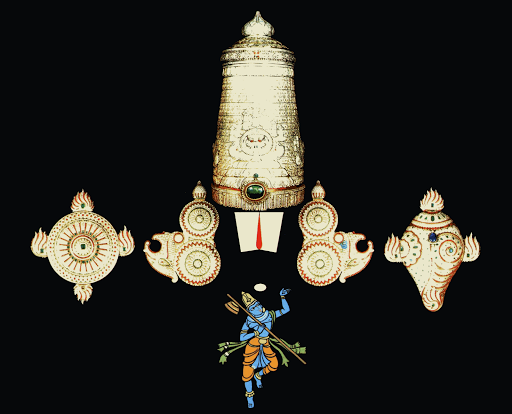
Meaning: Here Annamaacaarya praises the Lord with different names. He sees no difference in His innumerous images. Annamaacaarya paid his honest homage to the God in this song.
Toota toota ek parinda aise toota Ke phir jud naa paaya Loota loota kisne usko aise loota Ke phir ud naa paaya O o o o toota toota ek parinda aise toota Ke phir jud naa paaya Loota loota kisne usko aise loota Ke phir ud naa paaya Girta hua woh asma se Aakar gira zameen par Khwabon mein phir bhi badal hi the Woh kehta raha magar Ke allah ke bande hasde allah ke bande Allah ke bande hasde jo bhi ho kal phir aayega Allah ke bande hasde allah ke bande Allah ke bande hasde jo bhi ho kal phir aayega
Kho ke aapne par hi to usne tha ud naa sikha Kho ke aapne par hi to o o o Kho ke aapne par hi to usne tha ud naa sikha Gham ko aapne saath mein lele dard bhi tere kaam aayega Allah ke bande hasde allah ke bande Allah ke bande hasde jo bhi ho kal phir aayega Allah ke bande hasde allah ke bande Allah ke bande hasde jo bhi ho kal phir aayega
Aa aa aaa Tukde tuke ho gaya tha har sapna jab woh toota Tukde tuke ho gaya tha aa aaa aa Tukde tuke ho gaya tha har sapna jab woh toota Bhikre tukdon mein allah ki marzi ka manzar paayega Allah ke bande hasde allah ke bande Allah ke bande hasde jo bhi ho kal phir aayega Allah ke bande hasde allah ke bande Allah ke bande hasde jo bhi ho kal phir aayega Toota toota ek parinda aise toota Ke phir jud naa paaya Loota loota kisne usko aise loota Ke phir ud naa paaya Girta hua woh asma se Aakar gira zameen par Khwabon mein phir bhi badal hi the Woh kehta raha magar Ke allah ke bande hasde allah ke bande Allah ke bande hasde jo bhi ho kal phir aayega Allah ke bande hasde allah ke bande Allah ke bande hasde jo bhi ho kal phir aayega Allah ke bande hasde allah ke bande Allah ke bande hasde jo bhi ho kal phir aayega Allah ke bande hasde allah ke bande Allah ke bande hasde jo bhi ho kal phir aayega
Musu Musu Hasi, Deu Malai Lai Musu Musu Hasi Deu Zara Muskura De, Mukura De Zara Muskura De, Aye Khushi Gham Baat Le Tu Apne Humse Tu Le Hansee Ho Gaye Hum Abh Tere Tu Ho Gayee Apni Musu Musu Hasi, Deu Malai Lai Musu Musu Hasi Deu Zara Muskura De, Mukura De Zara Muskura De, Aye Khushi Jawan Dil Ki Rahon Mein Jaise Khilti Hai Kali Tere Hoton Pe Basee Aisi Halki Si Hansee Jawan Dil Ki Rahon Mein Jaise Khilti Hai Kali Tere Hoton Pe Basee Aisi Halki Si Hansee Phir Kyoon Chupp Rahi Ho Dil Ki Baatein To Bataoo Goom Soom Se Na Raho Tum Abh Jaana Muskuraoo Haan Haan, Musu Musu Hasi, Deu Malai Lai Musu Musu Hasi Deu Zara Muskura De, Mukura De Zara Muskura De, Aye Khushi... Musu Musu Hasi, Deu Malai Lai Musu Musu Hasi Deu Zara Muskura De, Mukura De Zara Muskura De, Aye Khushi Maana Humse Ho Gayee Ek Choti Si Khataa Hans Do Na Tum Zaraa Do Na Humko Tum Sazaa Maana Humse Ho Gayee Ek Choti Si Khataa Hans Do Na Tum Zaraa Do Na Humko Tum Sazaa Tum Jo Hans Pade To Abh Hum Bhi Muskurayein Aao Mil Ke Saath Gaayein Dil Se Dil Bhi Milayein Hey Hey, Musu Musu Hasi, Deu Malai Lai Musu Musu Hasi Deu Zara Muskura De, Mukura De Zara Muskura De, Aye Khushi Musu Musu Hasi, Deu Malai Lai Musu Musu Hasi Deu Hey, Zara Muskura De, Mukura De Zara Muskura De, Aye Khushi Musu Musu Hasi, Deu Malai Lai Musu Musu Hasi Deu Hey Hey, Musu Musu Hasi, Deu Malai Lai Musu Musu Hasi Deu Hey Aye, Musu Musu Hasi, Deu Malai Lai Musu Musu Hasi Deu Hey Hey, Musu Musu Hasi, Deu Malai Lai Musu Musu Hasi Deu...
ल्: इस् धरती का रूप् ना उजड़ॆ इस् धरती का कॊ: रूप् ना उजड़ॆ ल्: प्यार् की ठंडी धूप् ना उजड़ॆ कॊ: प्यार् की ठंडी ल्: धूप् ना उजड़ॆ, सबकॊ मिलॆ, दाता कॊ: सबकॊ मिलॆ ल्: सुख् का वरदान् कॊ: सबकॊ सन्मति दॆ भगवान् अल्लाह् तॆरॊ नाम्, ईश्वर् तॆरॊ नाम् ल्: माँगॊं का सिन्दूर् ना छूटॆ ल्: माँगॊं का कॊ: सिन्दूर् ना छूटॆ ल्: माँ बहनॊ की आस् ना टूटॆ कॊ: माँ बहनॊ की ल्: आस् ना टूटॆ ल्: दॆह् बिना, दाता, दॆह् बिना ल्: भटकॆ ना प्राण् कॊ: सबकॊ सन्मति दॆ भगवान् कॊ: अल्लाह् तॆरॊ नाम्, ईश्{}वर् तॆरॊ नाम्,
Malgudi is a fictitious town in India created by R.K. Narayan in his novels and short stories. It forms the setting for most of Narayan's works. Starting with his first novel, Swami and Friends, all but one of his fifteen novels and most of his short stories take place here. Narayan has successfully portrayed Malgudi as a microcosm of India.
Malgudi Days is a collection of short stories by R.K.Narayan that focused on the trial and tribulations of a small Indian town of Malgudi. According to R.K. Narayan, Malgudi is a town "habited by timeless characters who could be living anywhere in the world" and is located on the banks of river Sarayu and surrounded by the Mempi Hills. Type rest of the post here
Telugu Version ప. చక్కని రాజ మార్గములుండగ సందుల దూరనేల ఓ మనసా
అ. చిక్కని పాలు మీగడయుండగ ఛీయను గంగా-సాగరమేలే (చ)
చ. కంటికి సుందర తరమగు రూపమే ముక్కంటి నోట చెలగే నామమే త్యాగరాజింటనే నెలకోన్నాది దైవమేయిటు- వంటి శ్రీసాకేత రాముని భక్తియనే (చ)
cakkani rAja-kharaharapriya
In the kRti ‘cakkani rAja mArgamu’ – rAga kharaharapriya, zrI tyAgarAja, exhorts his mind to follow the royal path of devotion and not to go for any short cuts.
P cakkani rAja mArgamul(u)NDaga sandula dUran(E)la O manasA
A cikkani pAlu mIgaDa(y)uNDaga chI(y)anu gaGgA sAgaram(E)lE (cakkani)
C kaNTiki sundara taramagu rUpamE mukkaNTi nOTa celagE nAmamE tyAga- rAj(i)NTanE nelakonn(A)di daivamE(y)iTu- (v)aNTi zrI sAkEta rAmuni bhakti(y)anE (cakkani)
Gist O My Mind! When there are fine royal paths, why enter bylanes? When there are condensed milk and cream, why this destestable toddy? What a very beautiful form which is a feast to the eyes! What a name which shines in the mouth of Lord ziva! What an Ancient Lord firmly established in the very house of this tyAgarAja! O My Mind! when there is the fine royal path called devotion to Lord zrI rAma of ayOdhyA having these attributes, why enter bylanes? Click Here for the Full Post..
జననీ పృథివీ కామ-దుఖ్ఖార్తే | జనకో దేవః సకల దయాళుః | 'దామ్యత, దత్త, దయధ్వం' జనతా | శ్రేయో భూయాత్ సకల జనానాం || శ్రేయో భూయాత్ సకల జనానాం || శ్రేయో భూయాత్ సకల జనానాం ||
Meaning:
Maithreem Bhajatha Akila Hrijjaytreem
Cultivate Friendship which will conquer all hearts
Athmava Deva Paranapi Paschyata
Look upon others as you do yourself
Yudham Thyajatha Spardhaam Thyajatha
Renounce wars Renounce competition
Thyajatha Pareshvakramam Aakramanam (Maithreem)
Give up wrongful aggression on others
Janani Prithivi Kamadughasthe
Our Mother Earth is ready to fulfill all our desires
Janako Devaha Sakaladayaluhu
We have the Lord, our Father, who is compassionate to all
Daamyatha Dattha Dayadhvam Janathaha
O, people of the world, be disciplined, be kind and be charitable
Shreyo Bhooyath Sakala Jananam
May mankind prosper!
Here the poet has used 'dAmyata, datta, dayadhvam' phrase in the last stanza, very significantly. There is a story and scope for wide ranging interpretation on it.
The story occurs in Brihad Aranyaka Upanishad (and some other places). In Br Ar Upanishad 5.2.2, it runs like this: Long back, there were three kinds of children (sons) for Prajapati, the Creator. In olden days father himself would be the teacher for most of their kids, to start with. After their studies under him all these three groups of children approached Prajapati and asked him for a sort of final sermon-like-teaching before they say good-bye!
Sanskrit & (English) format now: devA Uchuh "bravItu no bhavAn" - iti | (Gods said to him: "Please teach us") tEbhyo ha etad akSharam uvAcha 'da' iti | (He said to them, the single syllable 'da.) vyjNAsiShTA - iti | ( 'Did you understand?' - (he asked them)) 'vyajNAsiShma' iti ha Uchuh | ("(Yes), we have understood" - they told (him)) "dAmyata iti na Attha"- iti | ("(What) you said (to us is) 'Control yourselves (dAmyata')") "Om" - iti ha uvAcha, vyajNasiShTA iti | "That is OK", he said, "you have understood (it)!"
Then, the men approached him and asked, "Please teach us, father!" He told them also the same single syllable 'da', and asked them too, "Did you understand what I told you?" They, the men told, "Yep, we have. You told us to 'be charitable' ('datta'), isn't it?" "That is OK", he said, "you have got it!"
Next was the turn of the demons. When they too approached their father and asked him, "Please teach us", he told them also the same single syllable 'da'. "Have you understood it?", he asked them. They said, "Ya, we have. You told us to 'be merciful ('dayadhwam'); isn't it?" "That's OK", he said, "you have grasped it!"
Then, at that instant, a heavenly voice is heard thundering" "da, da, da; dAmyata, datta, dayadhwam !" That is why one should learn this triad, triple axioms: self-control('damam'), charity('dAnam') and mercy('dayA')!
In the above story, even though the author has used the terms as gods ('dEvAh'), men ('manuShyAh') and demons ('asurAh'), they may also be construed as the good men in respectable positions, common men and aggressive men in power with evil potentials - respectively. Every one may have more than one, even triple personalities, depending on several factors such as circumstance, interaction etc. Hence, the basic instruction is to observe all the three "da's" meant for all the disciplines.
Performed by Srimati M S Subbalakshmi specially arranged at the United Nations. This is a benedictory song, composed in Sanskrit for the occasion by the great saint-scholar preceptor Shankaracharya of Kanchi kAmakoTi pITha, India. Appealing for friendship that conquers all hearts, for non-violence, and tolerance to live and let-live, requesting to eschew aggression among peoples of all the nations of the world and to forsake unhealthy competition, aspiring for universal peace, and showering blessings of prosperity for the whole mankind.